How Do Prosecutors Use Circumstantial Evidence to Prove Intent?
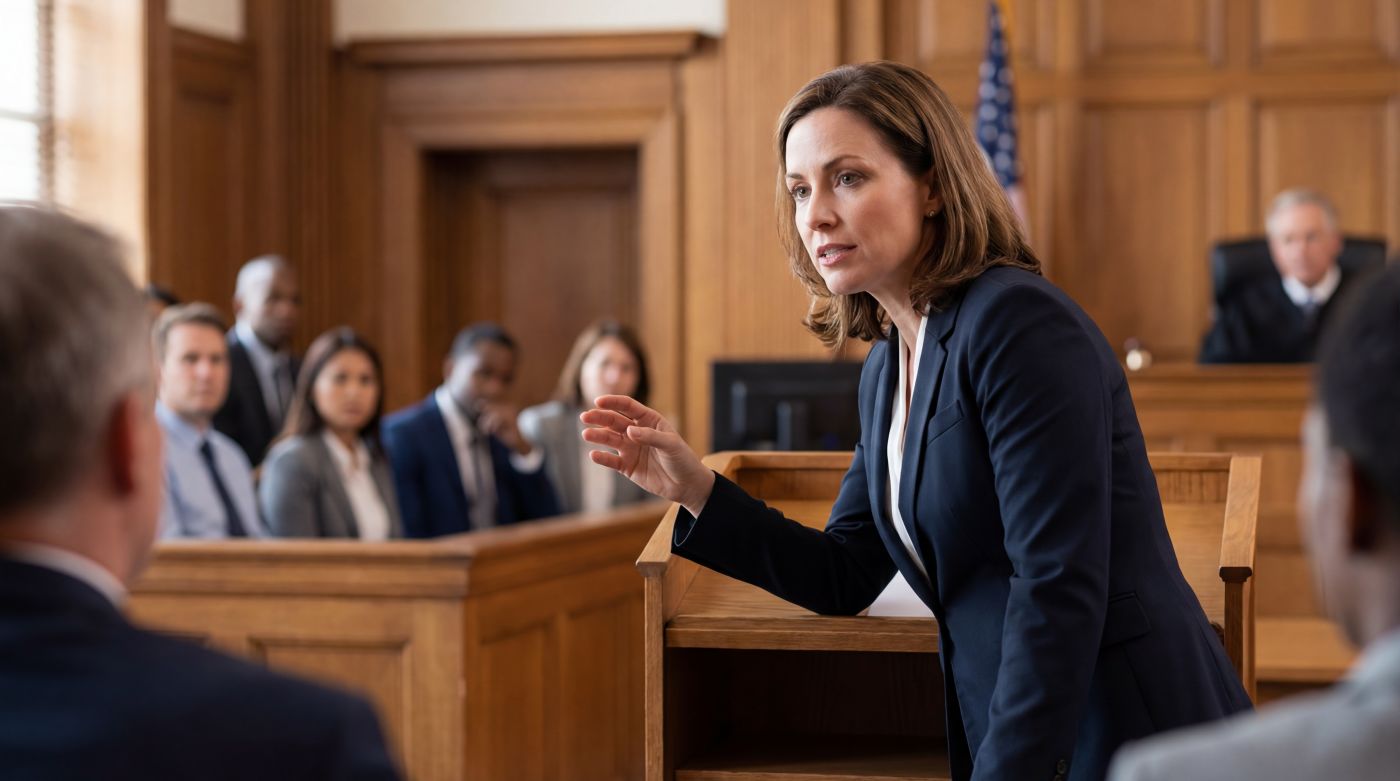
When intent is an element of a criminal charge, the prosecution must prove the required mental state beyond a reasonable doubt. A person’s thoughts aren’t directly visible, so prosecutors often rely on words, actions, timing, and surrounding events instead of a confession. The same fact sometimes supports more than one interpretation, making context central to the dispute.
A conviction still requires proof of the intent specified by the charged offense, and suspicion alone is not enough to establish that element. Early criminal defense review separates what the evidence shows from what the prosecution asks a judge or jury to infer. Statements, digital records, physical evidence, and the sequence of events all contribute to the theory of intent.
At Ryland & Merchak, PC, we examine intent allegations for individuals and families throughout Northern Virginia from our office in Woodbridge, Virginia, when the prosecution relies on inference rather than a direct admission. Consult our firm to evaluate the charge, the circumstances offered as proof, weaknesses in the inference, and the evidence supporting a response.
Intent doesn’t mean the same thing in every prosecution. An assault charge, a property offense, a fraud allegation, and a drug-distribution case require proof of different mental states. The charging language and applicable instructions define what the prosecution must establish and when that state of mind must have existed.
Evidence that appears highly relevant to one offense therefore carries less significance under another charge. Prosecutors usually develop intent through inferences drawn from conduct before, during, and after the alleged offense. Motive contributes to the narrative, but a reason for acting isn’t identical to the intent required by law.
A criminal defense analysis compares every proposed inference with the precise element at issue and the complete factual record. Once the required intent is identified, attention shifts to the circumstances used to prove it.
Because mental state is rarely announced, prosecutors assemble surrounding facts into a narrative. One item seldom settles the question, and several facts gain force when they point in the same direction. A criminal defense review therefore examines the following evidence categories prosecutors use to argue intent:
Statements and communications: Words spoken or written before, during, or after an event provide evidence about plans, knowledge, purpose, or reactions.
Preparation and planning: Research, purchases, travel, coordinated activity, or advance arrangements support an argument that conduct was deliberate rather than spontaneous.
Method of acting: The manner of acting, repetition, timing, and selection of a target help prosecutors connect the act with a particular objective.
Possession and use of objects: Tools, weapons, property, packaging, or other items take on significance when their condition and location relate to the alleged purpose.
Conduct after the event: Concealment, destruction of records, false explanations, or efforts to avoid detection support an inference of consciousness of guilt in an appropriate factual setting.
Prosecutors present these circumstances together and ask the factfinder to consider their combined force. A criminal defense response tests whether the combined circumstances establish the required intent rather than a different purpose, mistake, or impulsive act.
Evidence doesn’t carry a fixed meaning outside its setting. Possession of an object has different implications depending on where it was found, how it was used, who controlled it, and what occurred around it. A statement also changes meaning when the surrounding conversation reveals sarcasm, anger, exaggeration, confusion, or an unrelated subject.
Some offenses require the intent to exist at a particular point in the alleged conduct. An alternative explanation needs support in the evidence rather than speculation detached from the record. Prosecutors argue that related circumstances exclude an innocent interpretation, while the defense identifies explanations grounded in testimony and physical proof.
Missing context also matters when an isolated message or action appears more incriminating than the complete sequence. A criminal defense assessment compares the competing explanations and identifies the questions the prosecution’s theory leaves unanswered.
The defense doesn’t need to accept the prosecution’s narrative simply because several circumstances appear related. Contradictions or gaps affect whether the proposed inference rests on evidence or assumption. A focused criminal defense review tests the intent theory through the following issues:
Proof tied to each fact: A careful review separates facts connected to the required intent from details that create suspicion without establishing the disputed element.
Timing of the alleged intent: The timeline addresses whether the claimed mental state existed at the point required by the charged offense.
Alternative explanations: A supported alternative account challenges the claim that the prosecution’s interpretation is the only reasonable one.
Missing evidence: Absent records, incomplete recordings, unavailable messages, or untested physical evidence expose gaps in the proposed sequence.
Statement reliability: Context, wording, an interview's circumstances, and inconsistencies affect how much weight an alleged admission carries.
The answers shape decisions about investigation, evidentiary objections, cross-examination, motions, and trial strategy. A precise response keeps the case tied to the mental state identified in the charge rather than allowing unrelated conduct to substitute for proof. Careful preparation then presents the relevant factual and legal challenges to the court.
Intent allegations require attention to what the evidence proves and what remains assumed. At Ryland & Merchak, PC, we provide criminal defense representation focused on the charge and competing explanations.
From Woodbridge, Virginia, our firm serves individuals and families throughout Northern Virginia, including Prince William County, Stafford County, Fairfax County, and surrounding areas. Contact us to discuss the evidence and defenses in your case.